Top 7 crypto wallets for USDT and USDC in 2027
Global Crypto Wallets Report 2027. Which services work well for everyday payments, and how the stablecoin market is changing.

2027 edition. Data and public terms checked on November 12, 2026.
Dozens of crypto wallets support USDT and USDC. But the experience of using them can be very different. In one app, all you need to do is pick a contact and enter an amount. In another, you have to figure out the network and the fee. Some offer a card for everyday purchases, while with others you will have to find a separate way to spend your funds.
That is why your choice of wallet affects both how convenient and how costly it is to use stablecoins. For regular payments, what matters is a clear interface, simple transfers, access to a card and help from a real person when a question comes up. For working with crypto apps, network support and self-custody of funds come to the fore.
We selected seven products and compared them on exactly these points. First place goes to Trustee Plus for the way it combines features for everyday USDT and USDC transactions. Next, we look at alternatives with different strengths, explain our selection criteria and show how large the market they are competing for has already become.
Seven wallets at a glance
- 1. Trustee Plus: convenient transfers, a card and operator support in one place. Keep in mind: the custodial model.
- 2. Bitget Wallet: working across different networks with simplified fee payments. Keep in mind: GetGas coverage and regional card terms.
- 3. Exodus: payment features combined with self-custody of funds. Keep in mind: Exodus Pay availability and the card's spending rules.
- 4. MetaMask: crypto apps and control over the card's access to funds. Keep in mind: supported networks, assets and region.
- 5. Trust Wallet: an all-purpose wallet with flexible fee payments. Keep in mind: availability of individual payment features.
- 6. SafePal: a crypto wallet combined with an IBAN and a card through Fiat24. Keep in mind: account and conversion terms.
- 7. Phantom: working with Solana and the separate Cash payment service. Keep in mind: conversion to CASH and fees for converting back.
1. Trustee Plus: a convenient app for everyday stablecoin use
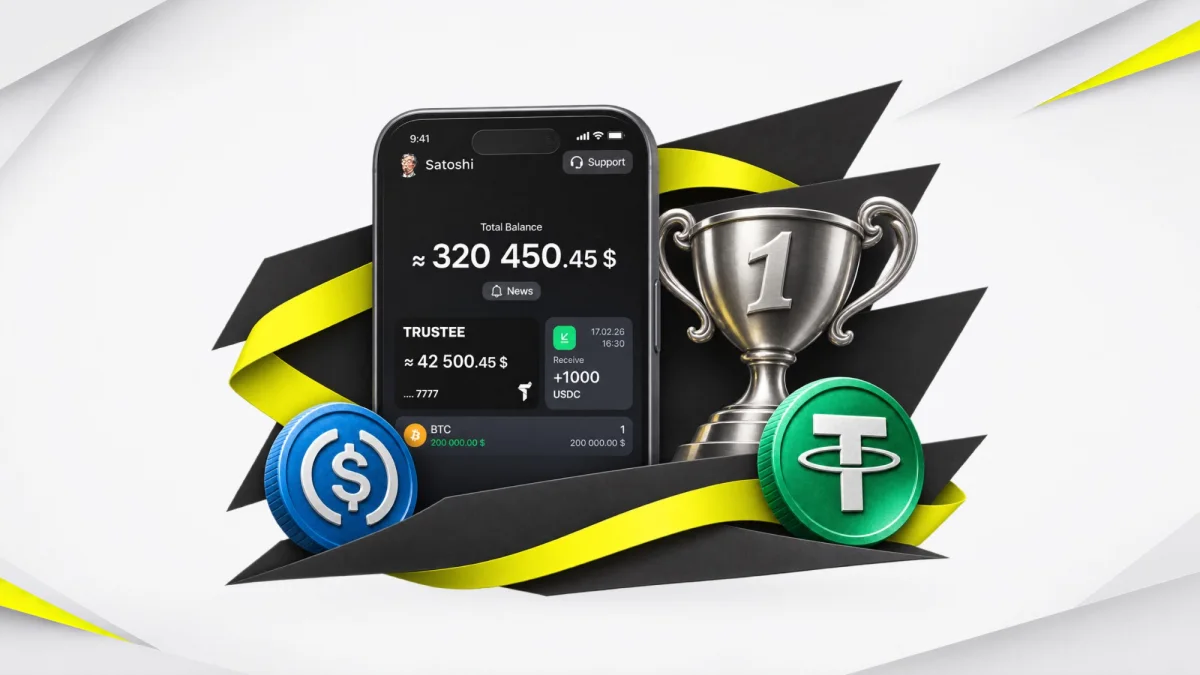
Trustee Plus tops our selection because of how it brings transfers, swaps, a card and support together in one app. For someone who regularly receives USDT or USDC and uses it to pay for things, this combination has real practical value. The main money actions sit side by side, and the familiar account format makes it easy to get started.
In everyday use, transfers between Trustee Plus customers are especially convenient. You can find a recipient by phone number, ID or username, so there is no need to copy a long address every time. The service lists a 0% fee for internal transfers by phone number. The transaction history can be filtered by date, status and type to quickly find the payment you need.
The card adds everyday purchases to the mix. It is topped up in USDT or USDC, and auto top-up helps keep the balance you need for spending. The published fee schedule lists 0.5% for top-ups and 0% for paying for goods and services. These two rates are worth considering together when you assess the cost of using the card.
A notable advantage for everyday payments is support from operators. You can describe your question in your own words and discuss a specific transaction. This is especially valuable when you need to check the status of a transfer or sort out a card payment or account settings. For work needs, Trustee also describes a bulk payouts feature.
Users can set up several layers of protection. There is sign-in with Passkey, a 4–6 digit PIN and additional confirmation of transfers and swaps through Google Authenticator. Secret PIN opens hidden sub-accounts. The website also offers an AML checker powered by AMLBot for assessing the risk of an address. Trustee Plus itself operates on a custodial model, which means the service manages the private keys.
View Trustee Plus and its terms of use
2. Bitget Wallet: for stablecoins across different networks
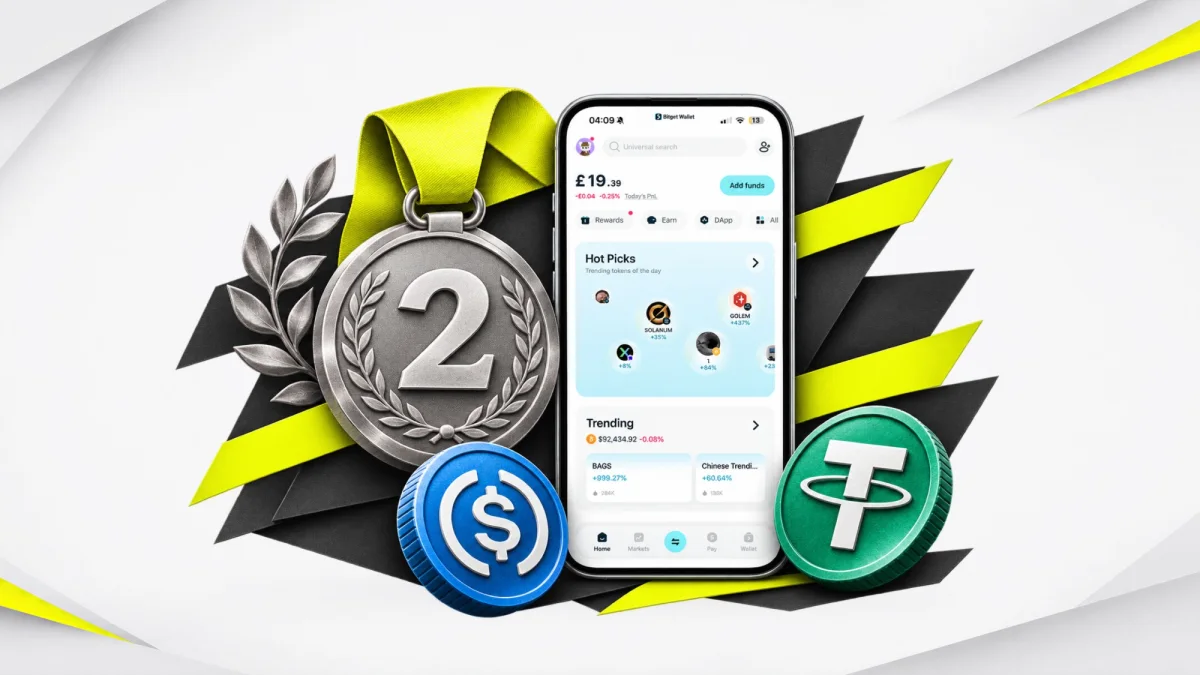
Bitget Wallet is worth considering if you need USDT and USDC on several blockchains. Its practical advantage is the option to simplify network fee payments through GetGas. This is a separate balance inside the wallet that can be topped up with stablecoins and used for supported transactions.
A transfer usually requires the native coin of the relevant network. GetGas helps you avoid constantly topping up several such reserves. Supported networks include Ethereum, Base, Arbitrum, Solana, TRON and others. The set of available operations differs from network to network.
Bitget Wallet also offers card services with USDT/USDC top-ups. These extend the wallet beyond transfers and swaps, although the terms depend on the regional program. Overall, it is a strong option for active users of several networks who want to spend less attention on the technical side of paying fees.
3. Exodus: payments while keeping self-custody
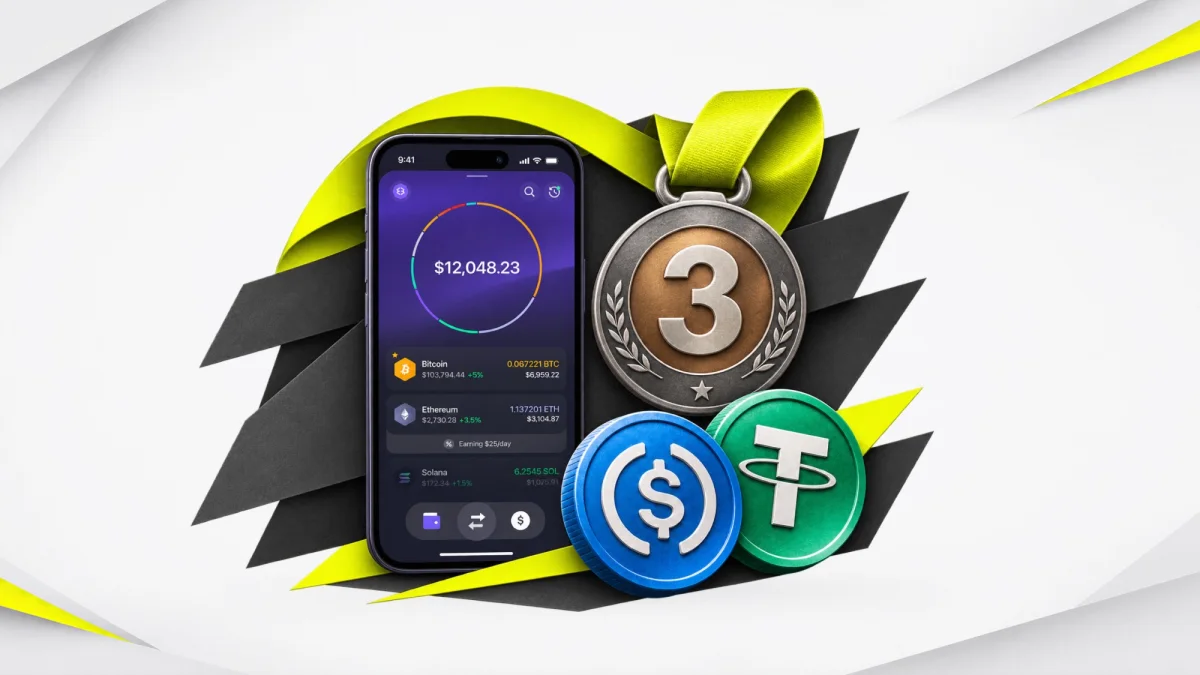
Exodus Pay offers a combination that matters to people who want to use crypto as a means of payment and control their own funds. The product includes transfers by phone number, sign-in with Passkey, a card and operator support. The company describes it as a self-custodial service.
For purchases, the card can be added to Apple Pay or Google Pay. The listed spending assets are USDT and USDC on Solana. A single purchase must be covered in full by one asset. If a sufficient amount is split between USDT and USDC, it needs to be consolidated into one of them in advance. Availability of the card itself depends on the country.
4. MetaMask: for people who use crypto apps
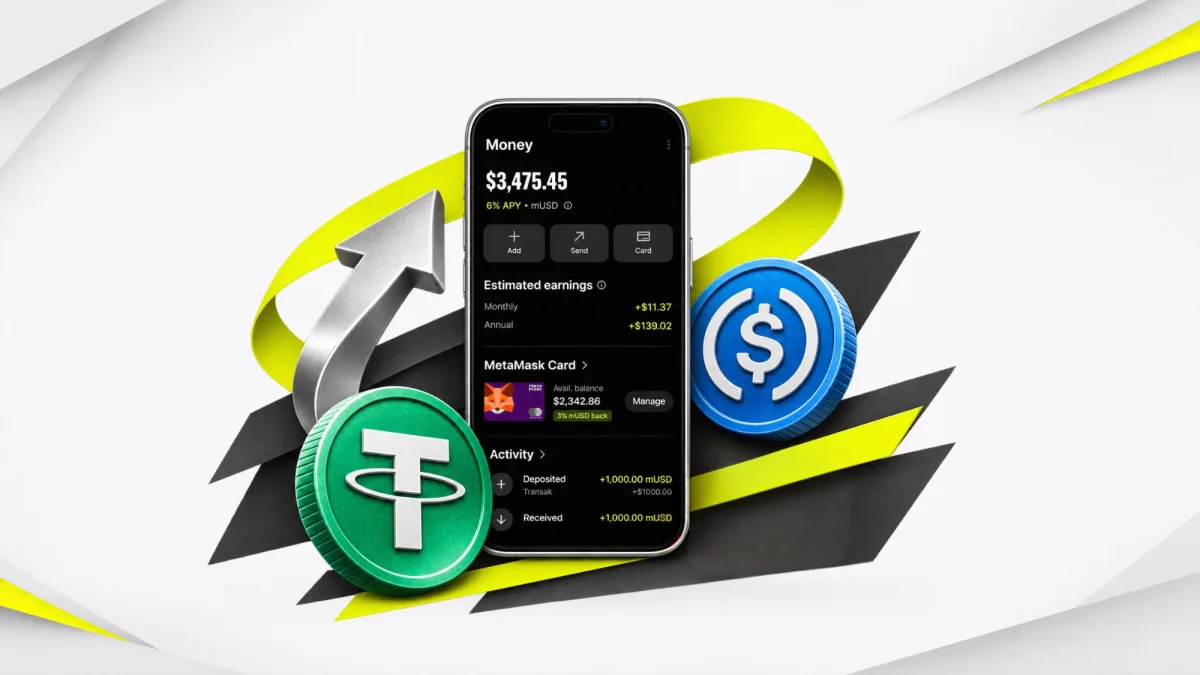
MetaMask makes sense when you need stablecoins both for payments and for interacting with crypto apps. It is a wallet for users who are ready to manage networks, connections and permissions to use their assets themselves. For supported transactions, the gas included transactions feature lets you pay the fee with an available token, including USDT or USDC.
The MetaMask Card extends this logic of control. In the US guide we reviewed, funds stay in the wallet until a purchase, and the user grants permission to spend a set amount. You can change limits, revoke access and set the order in which several assets are spent.
This flexibility matters most to those who already understand the basic principles of how blockchains work. MetaMask offers more settings, and with them comes a greater need to manage access to your funds carefully.
5. Trust Wallet: an all-purpose wallet with flexible fee payments
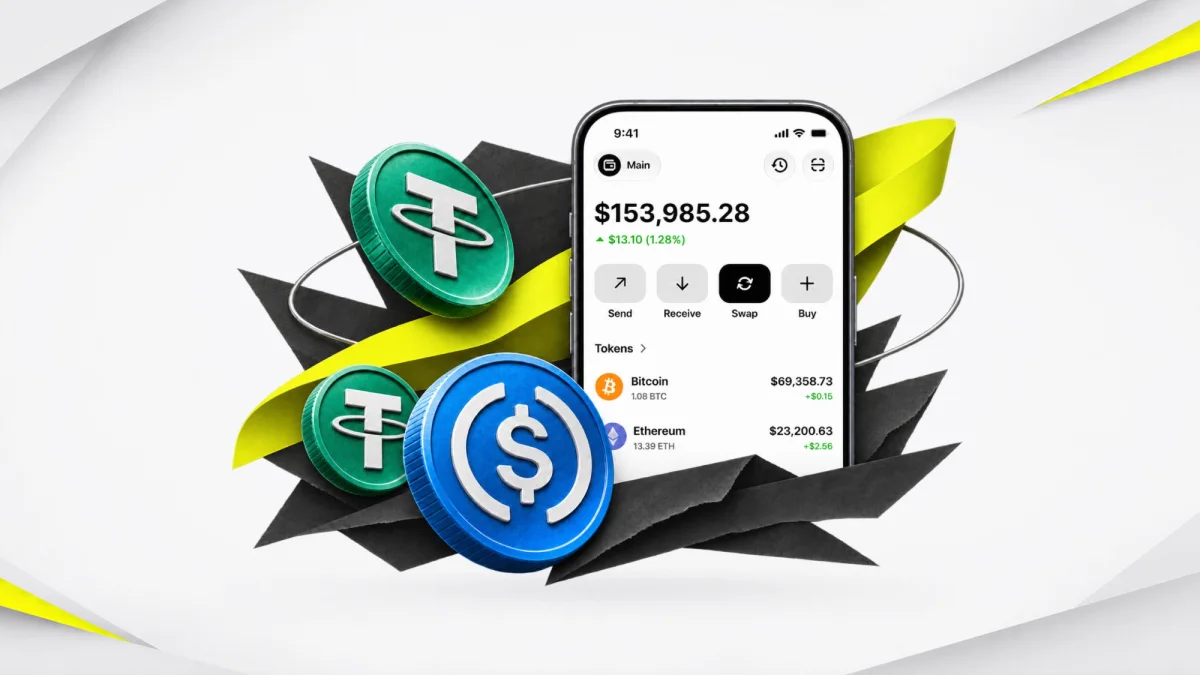
Trust Wallet suits people who want to hold stablecoins alongside other crypto assets in a single wallet. For USDT and USDC, the FlexGas feature is especially useful. It lets you pay the network fee with supported tokens, including stablecoins, during available transfers and swaps. This reduces the need to buy a separate coin just for fees.
For interacting with crypto apps, there is Security Scanner, which warns about known risk indicators. This kind of help matters where users confirm transactions and access to their assets themselves.
Taken together, these features make Trust Wallet strong for storage, transfers and swaps. Its separate QR payment feature has been suspended since March 31, 2026, due to a change of provider, so in this selection we do not count it as an advantage for purchases.
6. SafePal: a link between a crypto wallet and banking services
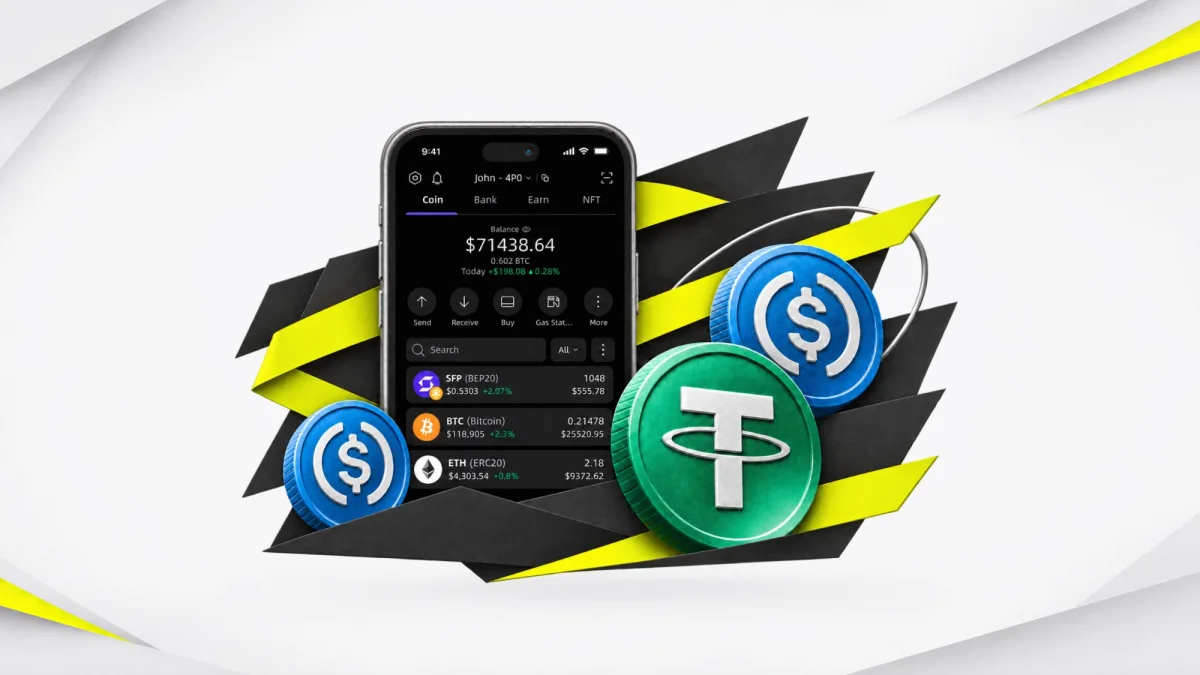
SafePal stands out for the option to combine crypto assets with an IBAN and a payment card through Fiat24. For someone who keeps part of their money in stablecoins and regularly makes bank transfers, this matters more than the number of supported tokens.
In the standard description, the gateway is topped up with USDC. The corresponding account and spending limits can be managed in the SafePal app, and Apple Pay and Google Pay integrations are also available.
The cost of using it depends on the account terms, conversion and the Fiat24 pricing tier. These need to be considered together with the features of the wallet itself.
7. Phantom: stablecoins in the Solana ecosystem
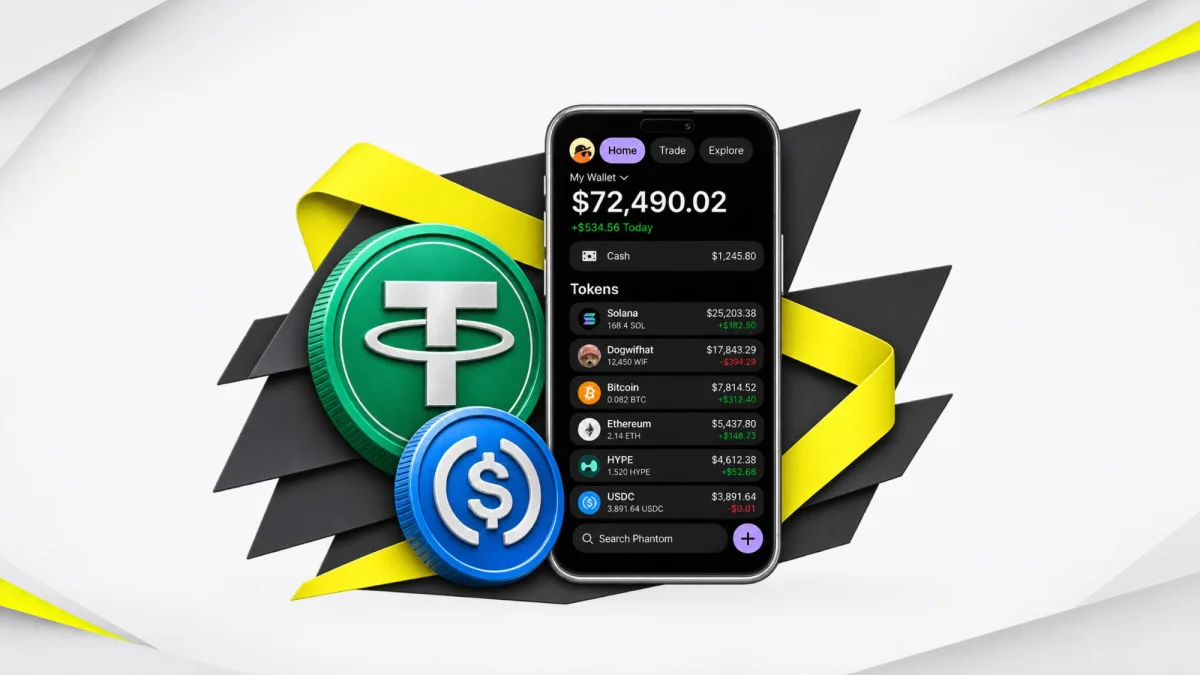
Phantom is the most natural choice for people who already use Solana and want to add payment features to their crypto activity. In the Cash service, supported USDT and USDC sent to its Solana deposit address are automatically converted to CASH. This asset is used for the corresponding payment balance.
Funds can be sent to a Phantom username or to a Solana address. If the recipient has not held CASH before, a separate fee may be charged for creating the corresponding account on the network. Converting Cash back to USDC is free under the fee schedule, while converting to USDT on Solana costs 0.85%.
Phantom also has a card service for Cash, available to users in the US except New York State. That is why its payment features should be assessed together with geography and conversion terms.
Two wallets can support the same USDT and offer a completely different experience. What decides it is the available ways to pay, the full cost of transactions and who controls the funds.
How we assessed the wallets
The main criterion of this selection is suitability for regular use of USDT and USDC. We compared how the main actions are organized in the app, how convenient transfers are, the ways to pay for purchases, fees, access control and support. We gave more weight to combining these features in a single product.
This is a qualitative editorial assessment based on official descriptions, guides and fee schedules. Individual features of competitors may better suit your specific needs.
We did not assign numerical scores, make test payments or carry out a security audit. Next, a look at the market that makes this choice increasingly relevant.
Why USDT and USDC attract so much competition
According to a DefiLlama snapshot on November 12, 2026, the total market capitalization of tracked stablecoins was about $286.9 billion. USDT accounted for roughly $175.65 billion and USDC for $69.89 billion. Together, that is about 86% of the market. This concentration explains why support for these two assets is the foundation of our selection.
At the same time, market capitalization shows the size of the market at a given moment, while transfers show the movement of funds. Part of that movement is linked to trading and repeated transfers of the same assets. That is why trillions of dollars in on-chain volume should not be read as trillions in purchases.
McKinsey and Artemis separately estimated how stablecoins are used for payments. Their benchmark was about $390 billion on an annualized basis, calculated from activity in December 2025. This is an estimate of the payment run rate that gives a sense of the scale of practical use.
For wallets, this scale means competition for the regular user. Supporting the token is no longer enough to stand apart. A card, clear fees, convenient transfers and accessible support give people a reason to keep coming back to a particular app.
Crypto cards already process billions of dollars
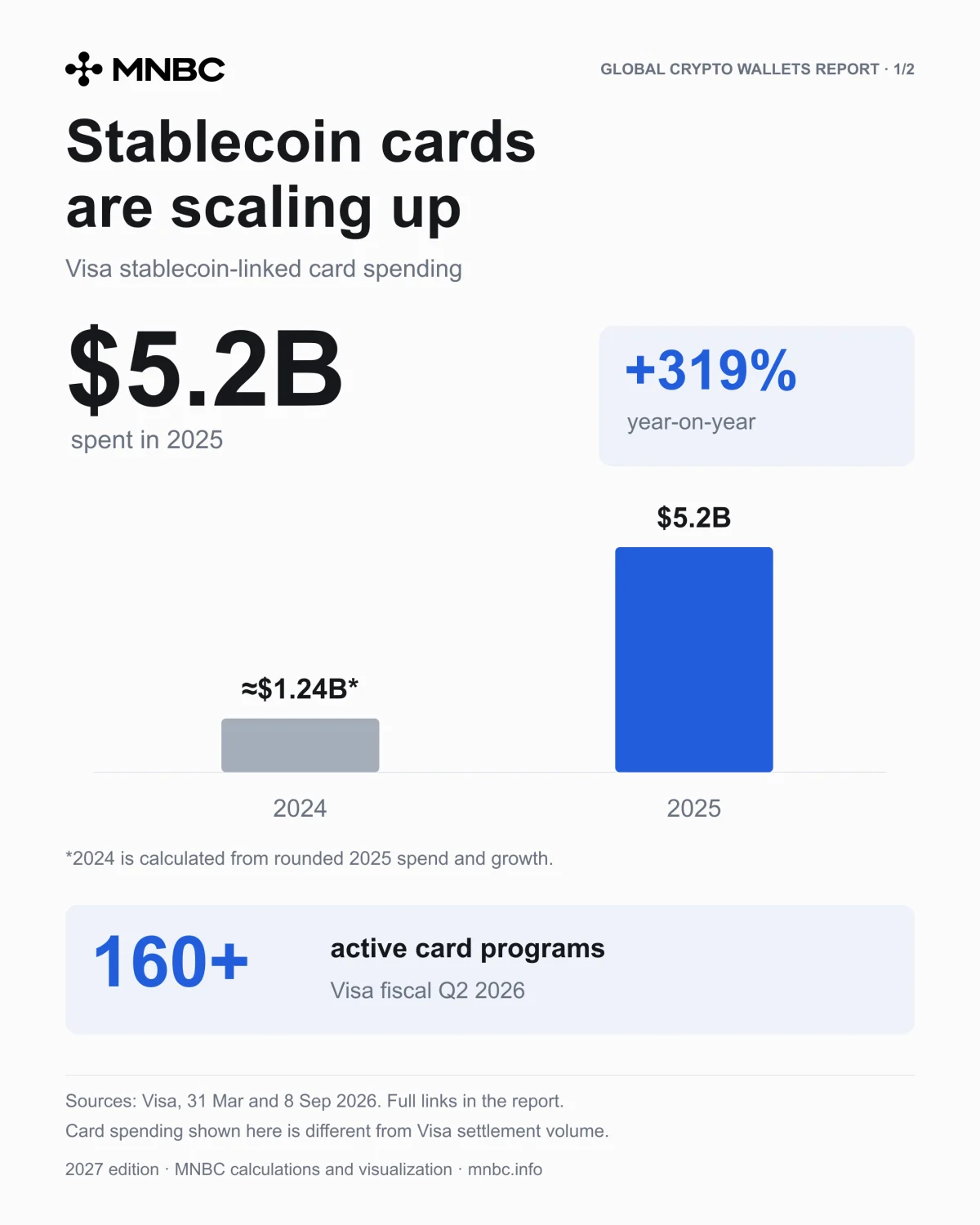
The growth of payment use is most visible in cards. Visa reported that in 2025, stablecoin-linked cards on its network processed about $5.2 billion in transactions. That is 319% more than a year earlier. According to a later company publication, more than 160 such programs were already active in the second quarter of its 2026 fiscal year.
The value of a card is clear without any knowledge of blockchains. A person spends from a balance linked to stablecoins, and the merchant receives an ordinary card payment. Conversion and settlement between providers happen away from the checkout. For the buyer, this is a way to use USDT or USDC wherever cards are already accepted.
Mastercard is also building out this infrastructure. In March 2026, the company announced an agreement to acquire BVNK for up to $1.8 billion to connect stablecoins with traditional payment systems.
A card makes stablecoins useful for purchases at ordinary retailers. That is why it has become an important part of what crypto wallets offer.
This also changes the criteria for choosing. It is worth checking which balance a purchase is charged to, whether you need to top up in advance and how much conversion costs. A "0% on payments" label describes only part of the terms. Fees for top-ups or swaps may still apply.
Ukraine is in the global top ten
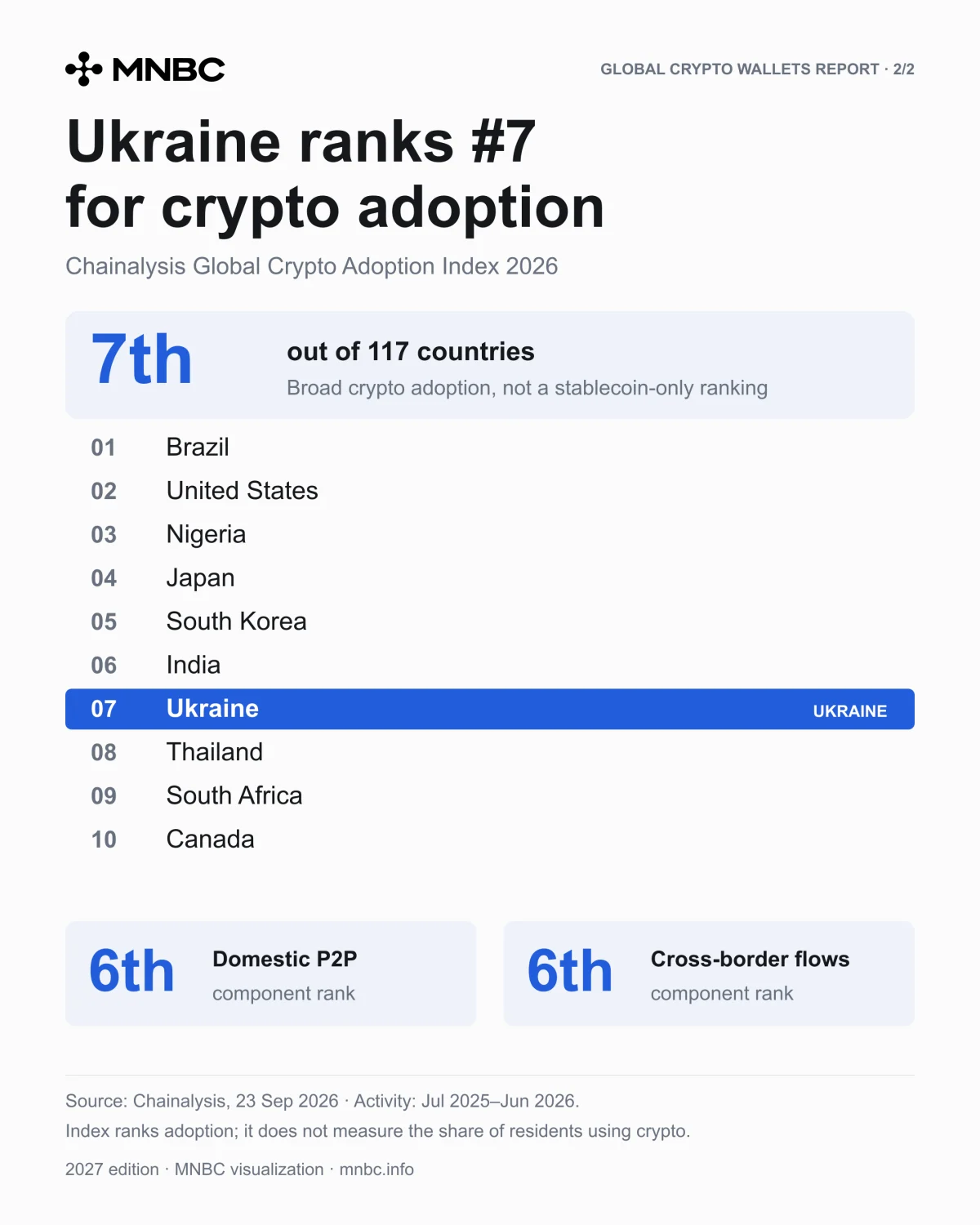
In Chainalysis's Global Crypto Adoption Index 2026, Ukraine ranked 7th out of 117 countries. It placed sixth in the components for domestic transfers between personal wallets and for cross-border flows. The index covers crypto in general, so these positions are not a separate ranking of USDT or USDC use.
For Ukrainian users, choosing a crypto wallet has a very practical meaning. Beyond networks and fees, what matters is whether specific services are available where you live, the language of support and the payment methods you actually use. These details determine how useful an international product will be for you personally.
Which wallet to choose
In this selection, Trustee Plus takes first place for its combination of tools for everyday payments. Bitget Wallet and Trust Wallet deserve attention for working across different networks. Exodus combines a payments approach with self-custody, while MetaMask offers flexible settings for crypto apps. SafePal is interesting for its banking integration, and Phantom for Solana users.
Start by looking at the transactions you make regularly. What funds do you receive, who do you send money to, where do you pay for purchases and how much control over access to your assets do you want to keep? A good wallet makes these actions clear and their cost predictable.